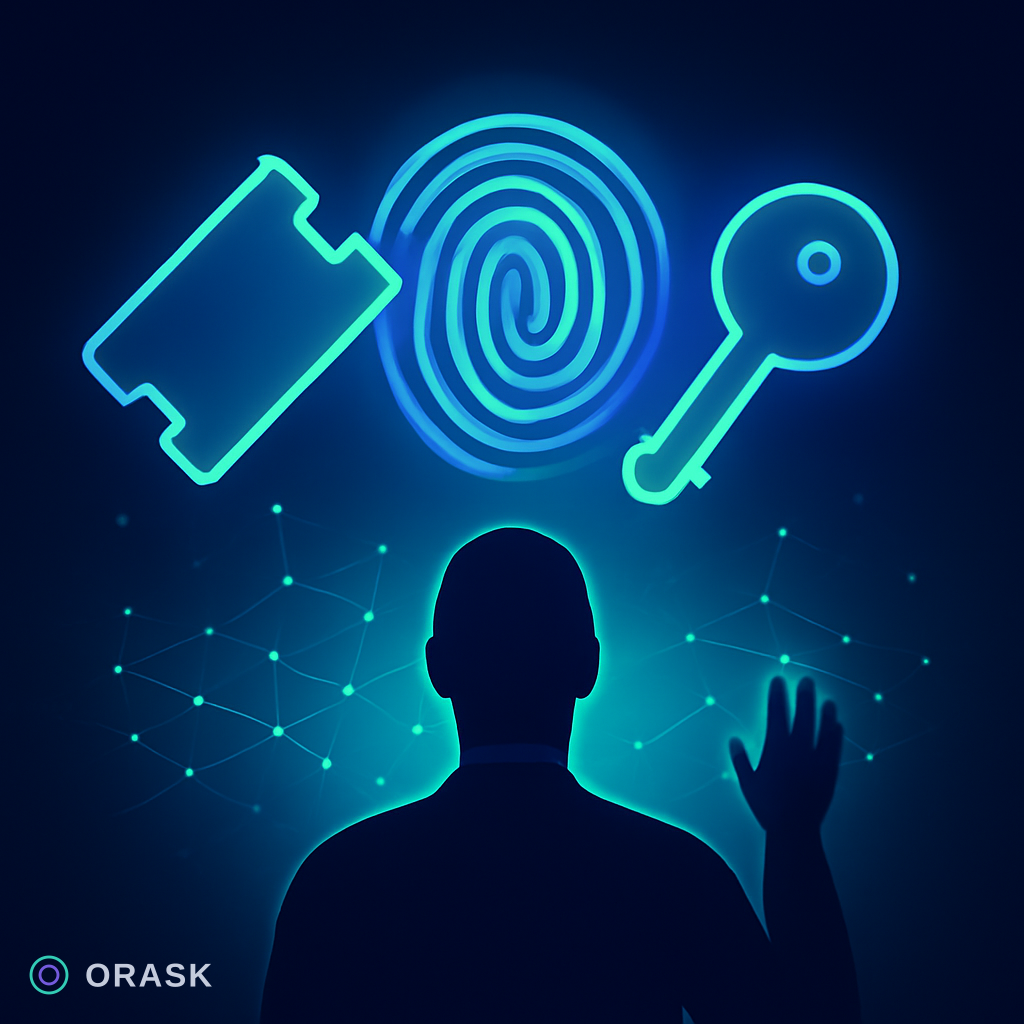
Most people, when they hear "NFT," picture a pixelated cartoon or an expensive digital painting that sold for an eye-watering sum. That association dominated headlines for years. But the underlying technology — a unique, verifiable token recorded on a blockchain — was always capable of far more than hosting digital art. Increasingly, developers and organizations are applying NFTs to problems that have nothing to do with collectibles: proving who you are, getting into a concert, or documenting ownership of something real.
Understanding why requires stepping back from the hype and looking at what an NFT actually does. A non-fungible token is a record on a blockchain that is unique, tamper-resistant, and traceable. Unlike a copy-paste image, the token itself cannot be duplicated. That property — verifiable uniqueness attached to a wallet address — turns out to be useful in many contexts where proving authenticity or ownership matters.
**Identity and Credentials**
One of the more practical applications is digital identity. Traditional credentials — diplomas, licenses, certifications — exist as paper documents or entries in centralized databases controlled by institutions. They can be forged, lost, or revoked without the holder's knowledge. An NFT-based credential flips that model.
When a university issues a degree as an NFT to a graduate's wallet, the credential lives with the person, not in a registrar's filing cabinet. An employer can verify it instantly by checking the blockchain, without calling anyone or waiting for a fax. The institution's wallet address acts as a trusted signature; if the token came from that address, the credential is genuine.
Projects exploring this space often use the term "soulbound tokens" — a concept popularized by Ethereum researchers — to describe NFTs that are intentionally non-transferable. You can own it, but you cannot sell it. This makes them more suitable for credentials, since a medical license or a university degree should not be tradeable on an open market.
The idea is still maturing. Questions around privacy (do you want all your credentials publicly visible on a blockchain?), key management (what happens if you lose access to your wallet?), and standardization remain genuinely open. But the direction is clear enough that governments and academic institutions in several countries have run pilot programs.
**Event Tickets**
The ticketing industry has long suffered from scalping, fraud, and counterfeit tickets. An NFT ticket addresses several of these issues at once. Each ticket is a unique token; the venue or organizer can verify it came from the official contract address, making fakes trivially easy to spot. Transfers can be programmed with rules — for example, a cap on resale price, or a royalty that flows back to the artist every time the ticket changes hands on the secondary market.
Fans who have purchased NFT tickets in various pilots report being able to resell through transparent marketplaces where the ticket's full history is visible. That transparency cuts down on the confidence tricks scalpers rely on. If the token's history shows it was minted by the official event contract and transferred only once, a buyer can be confident it is real.
Beyond entry, NFT tickets can carry persistent benefits. A ticket to a concert might double as proof of attendance — stored permanently in a wallet — and unlock future perks from the same artist, like early access to new releases or backstage experiences. The ticket becomes a relationship record between a fan and a creator, rather than a piece of paper discarded after the show.
**Physical Asset Ownership**
Linking NFTs to physical objects is trickier, but the concept has real traction. The idea is that a token on-chain represents ownership of something off-chain — a piece of real estate, a luxury watch, a bottle of wine. The token can be transferred, divided, or used as collateral in decentralized finance protocols, while the physical item sits in a secure vault or registered with a legal custodian.
Bitcoin and other blockchain networks have also seen experimentation here, though Ethereum and newer chains like Solana have hosted most of the activity due to their programmability. The fundamental challenge is the "oracle problem": the blockchain cannot itself verify that the physical object exists or is in good condition. You need trusted intermediaries — auditors, custodians, legal frameworks — to bridge on-chain records and off-chain reality. That is not a solved problem, and it is worth being clear-eyed about it.
Where this works best today is in high-value, well-documented assets where verification is already standardized, such as fine art with provenance records, or real estate in jurisdictions experimenting with blockchain land registries.
**What Actually Changes**
The common thread across these use cases is programmable, portable proof. Traditional ownership and identity documents are static, siloed, and controlled by the issuing institution. An NFT version can be carried by the individual, verified by anyone with internet access, and embedded with rules that travel with the asset — like royalty splits or transfer restrictions.
None of this is fully realized yet. Technical barriers, regulatory uncertainty, and the challenge of building user-friendly wallets that ordinary people trust all slow adoption. The speculative bubble that surrounded NFT art also left many observers skeptical of anything carrying the label.
But the skepticism is worth separating from the underlying mechanics. The questions NFTs are being applied to — how do you prove you are who you say you are, how do you verify a ticket is genuine, how do you record ownership without relying on a central authority — are real questions with real costs attached to them. The technology is one attempt at an answer, and it is being tested in places far removed from expensive JPEGs.