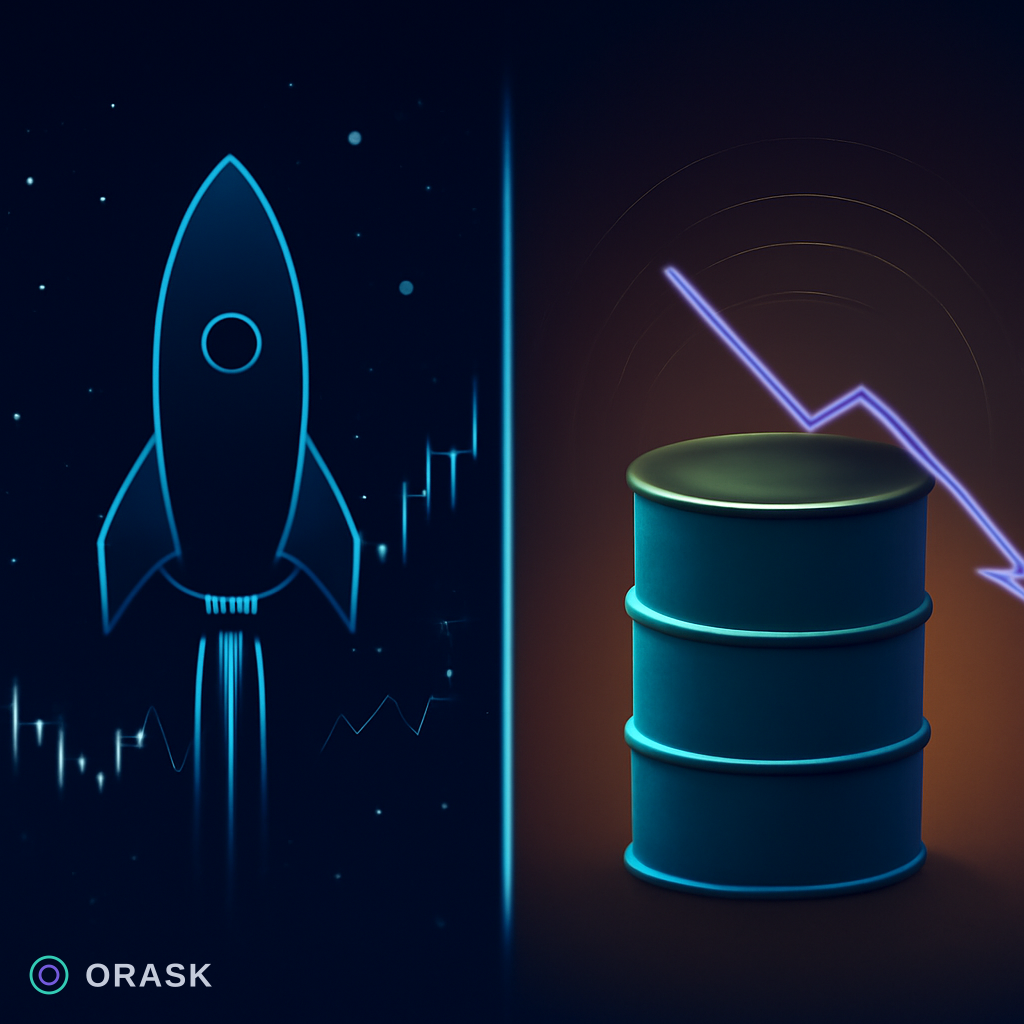
Three separate storylines are converging on markets this week — a surprise geopolitical breakthrough, the afterglow of a high-profile IPO, and the debut of a new face at the Federal Reserve. Each one, on its own, would be enough to keep traders busy. Together, they make for one of the more eventful market moments in recent memory.
**Ceasefire Sends Futures Up, Oil Down**
The most immediate market mover came from the Middle East. The United States and Iran agreed to a ceasefire this week, and financial markets responded quickly. US stock futures jumped on the news, while oil prices fell. The opening of the Strait of Hormuz — a narrow waterway through which a significant share of the world's oil passes — was cited as a key element of the deal's terms.
The logic behind the market moves is straightforward. Geopolitical tension in the Gulf region tends to push oil prices higher, because traders worry about supply disruptions. When that tension eases, and especially when a critical shipping lane is confirmed open, the risk premium built into oil prices can unwind fast. Lower oil costs feed through to the broader economy — affecting everything from airline fuel costs to consumer prices at the pump — which is part of why equity futures also moved higher.
That said, the picture is not entirely clean. Iran has been pushing differing versions of the deal's details, even as the US side has stuck to its own timeline and framing. When parties to an agreement describe it differently in public, markets tend to stay cautious about locking in a full "all-clear" response.
**The SpaceX IPO and What It Means**
Separate from the geopolitical story, investors are still processing the SpaceX IPO, which has drawn substantial attention this week. SpaceX, the private rocket company led by Elon Musk, has long been one of the most anticipated potential public listings in the technology and aerospace world. The IPO's arrival has prompted both enthusiasm and sober analysis.
Financial commentators have pointed to the complexity of valuing a company like SpaceX. One framing that has circulated draws on a 400-year-old lesson for investors — a reference to the early history of joint-stock companies and the risks that come with investing in ventures at the frontier of what is technically and commercially possible. The point is not to be dismissive of SpaceX's achievements, but to remind investors that transformative companies have always attracted both genuine believers and speculative froth.
The bottom line, according to analysts looking at the Musk-led enterprise, centers on what the company actually earns and how its various divisions — launch services, Starlink satellite internet, and others — fit together as a business. An IPO creates a public price, but it does not automatically resolve the underlying questions about long-term profitability or competitive moats.
**A New Fed Chief Steps Into the Spotlight**
Also on the agenda this week: Kevin Warsh makes his debut as the Federal Reserve's new chair. Warsh, a former Fed governor, was tapped for the role and now steps into one of the most watched jobs in global finance.
He enters at a complicated moment. According to reporting from Yahoo Finance, Warsh is caught between pressure from the Trump administration on one side and a bond market that is betting on interest rate hikes on the other. Those two forces do not necessarily point in the same direction, and how the new Fed chair navigates that tension will be closely watched by investors in both equities and fixed income.
The Fed's policy decisions on interest rates ripple through virtually every corner of financial markets. Higher rates tend to weigh on stock valuations, particularly for growth-oriented companies, while also affecting mortgage rates, corporate borrowing costs, and the broader pace of economic activity. A new chair's early public comments are often parsed intensely for signals about the direction of policy.
**Other Threads Worth Following**
Beyond the three headline stories, a few other developments are shaping the broader market backdrop this week.
In Washington, a lawyer who helped defend Donald Trump has been named as Wall Street's top cop — a pick that will be scrutinized for what it signals about financial regulation going forward.
In housing, a separate data point has drawn attention: home prices in rural America are rising sharply. The reasons are multiple, including remote work trends, limited housing supply outside major metros, and migration patterns that began accelerating during and after the pandemic.
And in technology, the first AI World Cup has been described as an $11 billion money machine — an illustration of how artificial intelligence is being attached to major cultural events as both a commercial and promotional vehicle.
Taken together, this week is a reminder of how many different forces bear on financial markets at any given moment — geopolitics, monetary policy, corporate listings, and long-run structural trends all running in parallel.