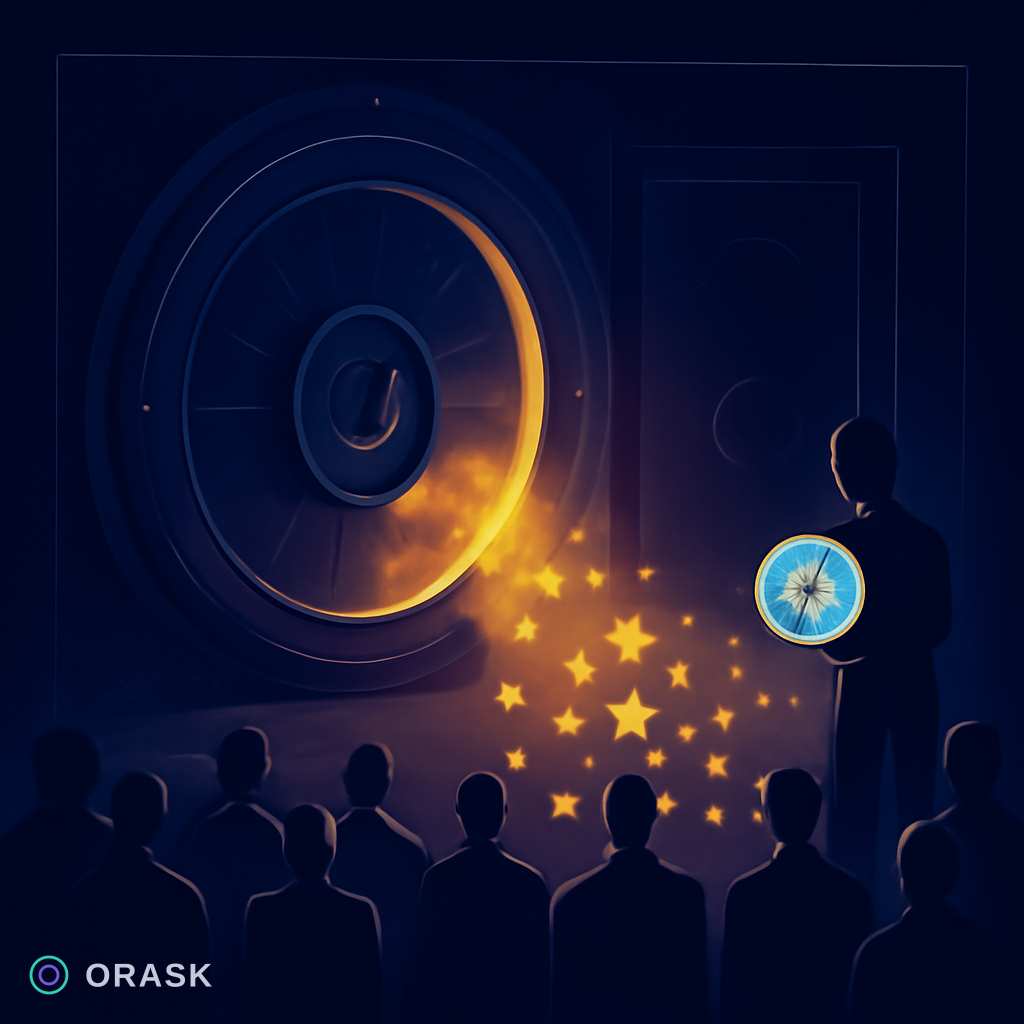
When a private company decides to sell shares of itself to the general public for the first time, that event is called an Initial Public Offering, or IPO. It is one of the most significant milestones a business can reach, and it draws attention from investors, analysts, and the financial press alike. But the mechanics behind it are often misunderstood.
Here is a plain-language breakdown of what an IPO actually is, how the process unfolds, and what it means for everyone involved.
**Why Would a Company Go Public?**
Most companies start out privately owned — by founders, early employees, and private investors like venture capital firms. These early backers put money into the company when it was small and risky, and eventually they want a return on that investment.
Going public is one of the primary ways to achieve that. By selling shares on a public stock exchange, a company can raise large amounts of capital, and early investors can sell their stakes to a much broader market. The company itself can use the money raised to fund expansion, pay down debt, invest in research, or pursue acquisitions.
There is also a reputational element. A publicly traded company carries a certain credibility and visibility that can benefit its relationships with customers, partners, and future employees.
**The Road to an IPO**
The process of going public is long, expensive, and heavily regulated. It typically unfolds over several months and involves a number of key players.
The company first selects one or more investment banks to act as underwriters. These banks — often called the "lead underwriters" or "bookrunners" — play a central role. They help the company determine how many shares to sell, at what price, and to whom. They also buy those shares from the company and resell them to institutional investors and the public, taking on some of the financial risk in the process.
The next major step is the preparation of a prospectus, filed with the relevant financial regulator (in the United States, that is the Securities and Exchange Commission, or SEC). This document is an exhaustive disclosure of the company's finances, business model, risks, leadership, and plans for the money being raised. It is public, and any serious investor can read it.
During a period known as the "roadshow," company executives travel to meet with large institutional investors — pension funds, mutual funds, hedge funds — to pitch the business and gauge demand. This process helps the underwriters refine the offering price.
**Setting the IPO Price**
The IPO price is one of the most scrutinized parts of the process. It is set the night before shares begin trading on the public market, based on the demand signals gathered during the roadshow.
If the price is set too high and the stock falls on its first day of trading, the IPO is considered a disappointment. If it is set too low and the stock surges dramatically, the company arguably left money on the table — it could have raised more. Investment banks try to find a balance, but it is an imprecise exercise.
The first day of trading is when ordinary retail investors can typically buy shares for the first time. Before that point, most of the shares go to institutional clients of the underwriting banks.
**What Happens After the IPO**
Once a company is public, its shares trade freely on an exchange like the New York Stock Exchange or Nasdaq. The price fluctuates constantly based on supply and demand, which is in turn driven by earnings reports, economic conditions, news events, and investor sentiment.
Being public comes with ongoing obligations. The company must report its financial results quarterly, disclose material events promptly, and adhere to a range of governance standards. This transparency is the trade-off for access to public capital markets.
There is also a "lock-up period," typically lasting around 90 to 180 days after the IPO, during which insiders — founders, early employees, and pre-IPO investors — are restricted from selling their shares. When this period expires, there can sometimes be downward pressure on the stock price as those insiders sell.
**Not the Only Path**
While the traditional IPO is the most well-known route to going public, it is not the only one. Direct listings allow a company to list its shares on an exchange without issuing new shares or using underwriters, relying instead on existing shareholders to sell. Special Purpose Acquisition Companies, or SPACs, are shell companies that raise money through an IPO and then merge with a private company, effectively taking it public through a back door.
Each method has its trade-offs in terms of cost, control, and investor access.
**The Bigger Picture**
An IPO is not a guarantee of success. Some companies that go public thrive; others struggle under the scrutiny and short-term pressure that comes with being publicly traded. For everyday investors, IPOs can be exciting, but the fundamentals of the underlying business matter just as much as the buzz surrounding the listing.
Understanding the mechanics helps cut through the noise — and that is usually a good starting point.